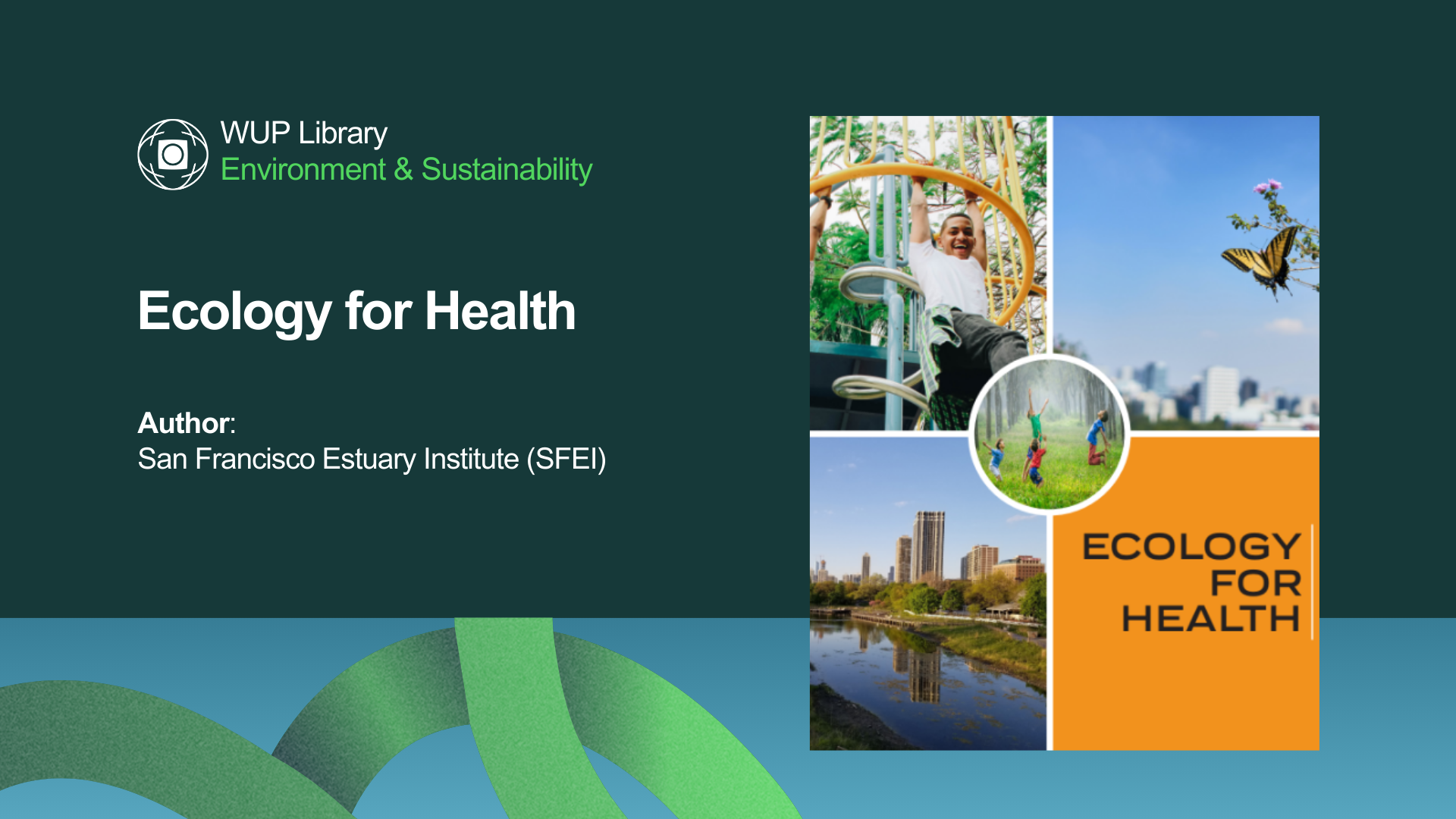
Ecology for Health offers a science-based framework for designing urban environments that nurture both biodiversity and human well-being. Developed by the San Francisco Estuary Institute with support from the Robert Wood Johnson Foundation, the guide integrates ecological science, public health, and urban design to provide practical strategies for planning and managing greener, healthier cities. It explores how parks, streetscapes, and open spaces can be designed to promote physical and mental health, strengthen ecological connectivity, and foster resilience in urban ecosystems.
The publication emphasizes the importance of balance — recognizing that the needs of people and native wildlife often intersect but can also conflict. Through strategies that span from citywide planning to site-level design, it introduces actionable guidance on habitat diversity, native planting, community-driven greening, and mitigating green gentrification. Ecology for Health stands as a comprehensive reference for urban planners, landscape architects, and policymakers aiming to create thriving, inclusive, and biodiverse cities that prioritize both people and nature.
Download the full article by clicking here!
¿New here?
Start your 30-day free trial and explore all the benefits of World Urban Parks membership
Already a member? Just log in to your account.

Want to learn how cities can design for both ecological resilience and human health?
Download Ecology for Health and explore its actionable framework for integrating biodiversity, health, and equity into urban spaces. To access the full document and its practical design strategies, you must be a member of World Urban Parks. If you’re not yet part of our community, we invite you to join today and enjoy exclusive access to content, resources, and professional opportunities.
👉 Become a member today by clicking here