The city is already talking. The question is whether we’re listening.
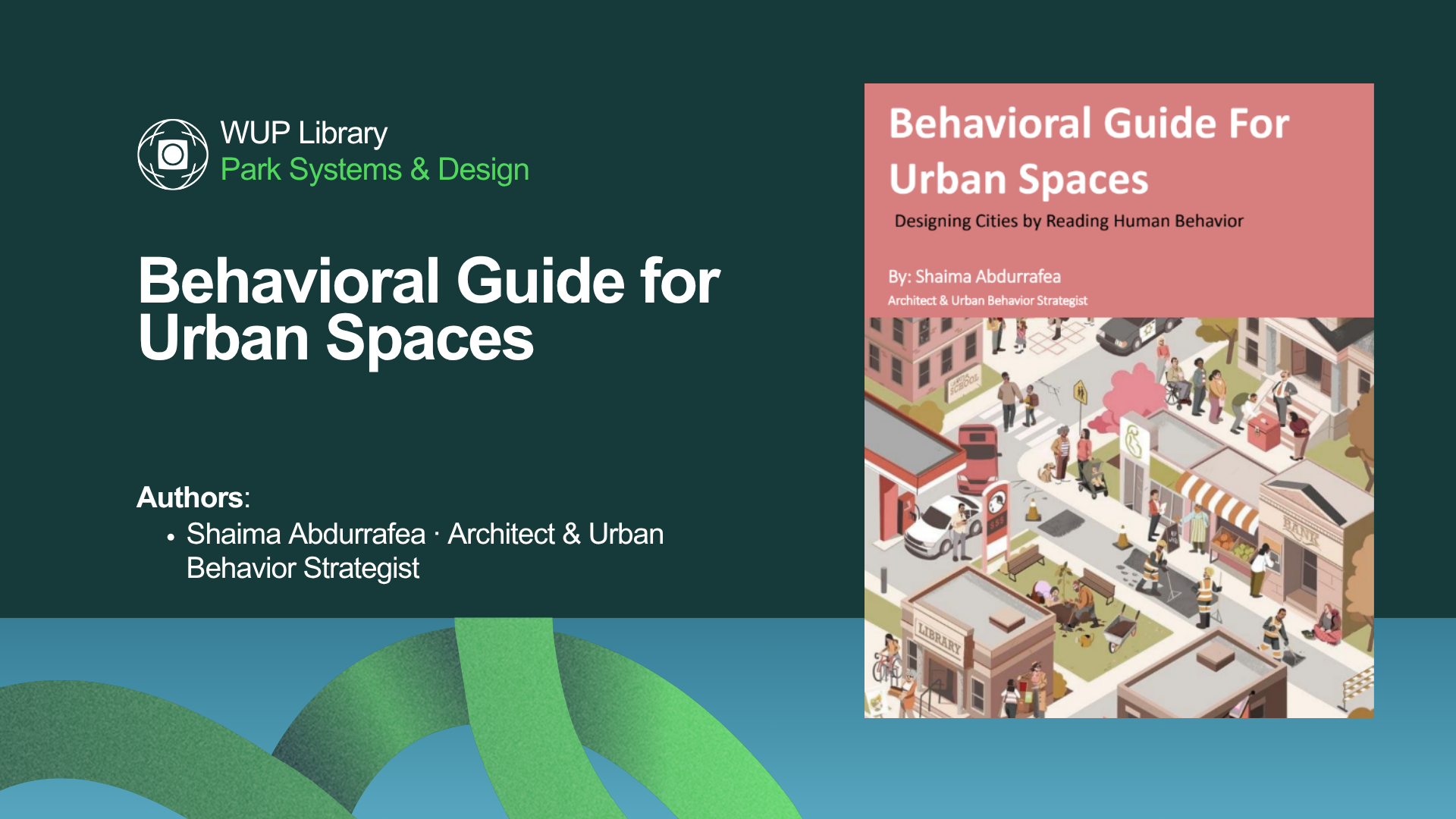
Most urban design starts with a plan and hopes people will follow it. This guide flips that logic. It starts with people — how they actually walk, sit, wait, gather, and sometimes quietly rebel against the spaces we build — and turns those everyday behaviors into a design language anyone can read.
What it is. A behavior-first framework for reading and designing public space. Instead of fixed solutions, it hands you a lens: watch what people do, and let their movements reveal what a place gets right, what it gets wrong, and where it could get better.
Why it matters. Behavior is the most honest feedback a city ever gives. A shortcut worn into the grass, a bench nobody uses, a corner everyone avoids after dark — these aren’t accidents. They’re signals. Read them well, and design becomes more humane, more resilient, and far more useful.
The 10 core behaviors it teaches you to observe:
- Walking & Movement — the desire lines that expose our real routes
- Sitting & Resting — where people pause tells you where a place works
- Waiting — time, stress, and dignity in disguise
- Social Interaction — how space invites or blocks connection
- Environmental Response — the body reacts before the mind does
- Safety-Seeking — perceived safety often beats the real thing
- Improvisation & Adaptation — people hacking their way around bad design
- Avoidance — where people don’t go says the most
- Rule-Breaking — broken rules usually mean broken design
- Belonging & Identity — people care for the places that reflect them
Who it’s for. Designers, planners, park managers, and decision-makers who want a shared, practical vocabulary — one that connects observation on the ground with real interventions.
Download the full article here 👇
¿New here?
Start your 30-day free trial and explore all the benefits of World Urban Parks membership
Already a member? Just log in to your account.

The takeaway is simple but powerful: don’t design against human behavior. Design with it.
Join the global conversation. If reading cities through human behavior speaks to you, you’re not designing alone. Become part of World Urban Parks — the international community connecting the people who plan, build, and care for the public spaces where this behavior comes to life. Bring your ideas to a worldwide network of parks and recreation professionals — join World Urban Parks today.