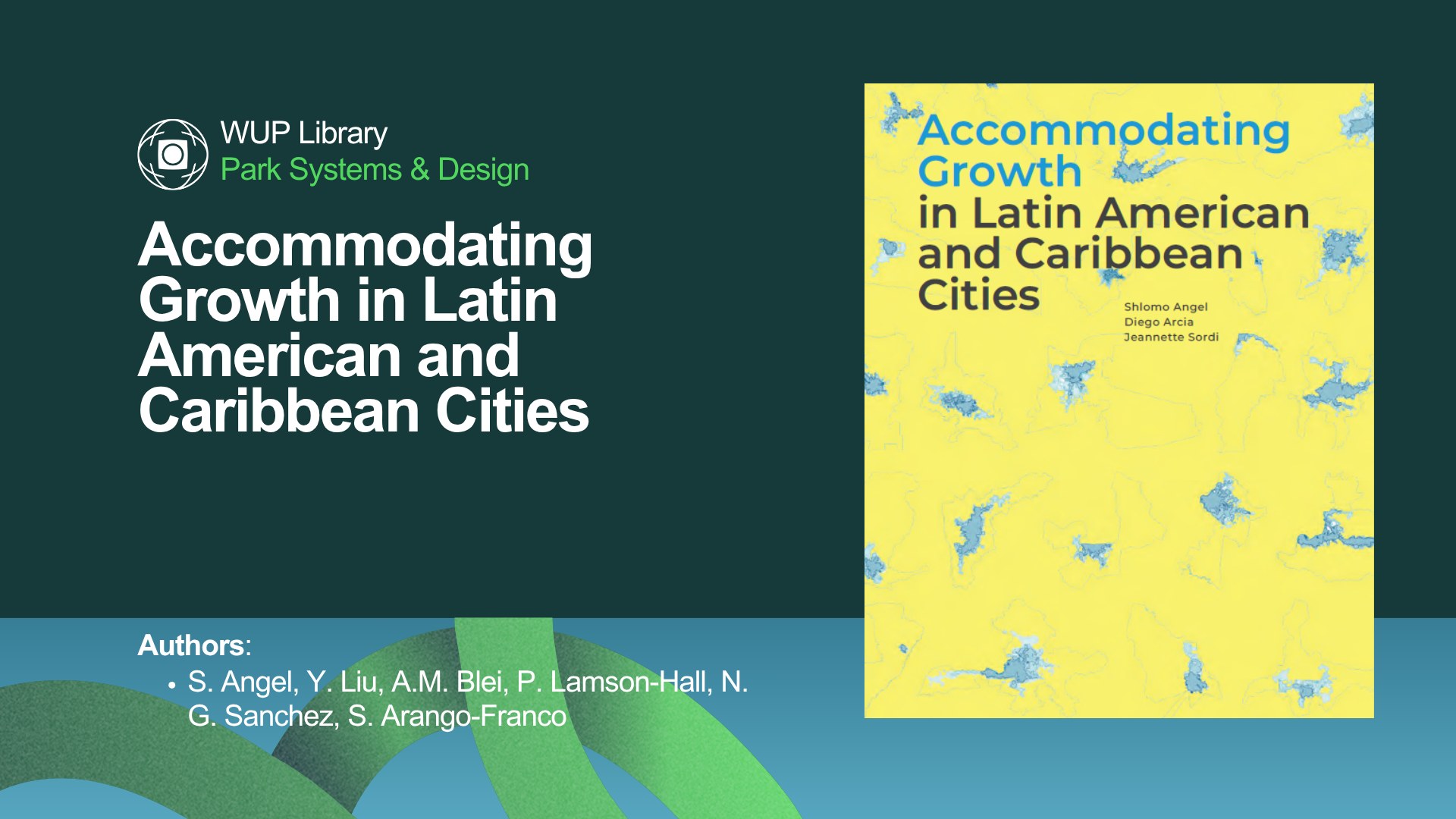
What if the way your city grows today determines whether future residents ever get access to a park, a tree, or a breath of fresh air? That’s not a rhetorical question — it’s the urgent reality documented in Accommodating Growth in Latin American and Caribbean Cities, a groundbreaking new report jointly produced by the Inter-American Development Bank, New York University, and the Korea Research Institute for Human Settlements.
“Urban expansion is mostly unavoidable — but if it is well planned, it can provide an opportunity to reduce inequality and foster a sustainable transformation of territories.”
Across 70 cities — from São Paulo to Mérida, from Bogotá to Port-au-Prince — researchers mapped four decades of urban growth to reveal a striking finding: average population density across the region dropped from 75 to just 59 people per hectare between 1990 and 2020. Cities are spreading out faster than they’re filling in. And in that sprawl, green spaces, public parks, and open areas are among the first casualties.
The report challenges one of urban planning’s most cherished myths: that density is always the answer. Instead, it makes the case that strategic expansion — planned in advance, with arterial roads secured, public open spaces designated, and communities engaged — can be just as sustainable as densification. The difference between a future city with thriving green corridors and one buried under poorly serviced informal settlements? Whether planners act now.
70
cities mapped across LAC over 4 decades
3.3 m²
public open space per capita in Valledupar — far below the recommended 10–15 m²
12
action guidelines for managing urban expansion equitably
For park professionals and urban green space advocates, this report is essential reading. It shows how cities like Valledupar (Colombia) scrambled to secure land for public parks only after unplanned growth had already made it nearly impossible — and how cities like Toronto designed hierarchies of open space that gave every resident meaningful access to nature. The contrast is stark, and the lessons are urgent.
The full publication also includes an Atlas of 68 cities, three detailed case studies (Campo Grande, Mérida, and San Salvador), and a strategies section covering transit-oriented development, climate urbanism, and participatory data tools. It’s a rich resource for anyone working to ensure that growing cities also become greener, more equitable ones.
Download the full article here
¿New here?
Start your 30-day free trial and explore all the benefits of World Urban Parks membership
Already a member? Just log in to your account.

Join the global movement
Be part of the professionals shaping greener, more equitable cities. World Urban Parks connects thousands of park managers, urban planners, landscape architects, and green space advocates across the globe. Get access to resources like this — and the community to act on them.